
Traditional vs. Modern Dental Implant Replacement Options for Missing Teeth
Many adults struggle with multiple missing teeth. Modern dental implant options offer you tooth replacement that go beyond traditional approaches.
The reality of tooth loss as we age: What are replacement options for missing teeth?
Are you dealing with multiple missing teeth and wondering about your replacement options? Understanding the available treatments is the first step toward making an informed decision.
Many adults face significant tooth loss. Contributing factors include poor oral hygiene, hereditary issues, certain foods, medications, and the natural aging process. Losing multiple teeth was once considered an inevitable part of getting older. Today, modern dentistry offers several solutions to help you maintain, or even enhance, your quality of life and
oral health. Among these options are traditional dentures, implant supported dentures, (like All-on-4 or All-on-X), and small-diameter implant-retained ‘overdentures’ (or SDIRO).
In this 3-part series, we’ll examine today’s options that can get you back to eating and smiling without hesitation. And put dealing with multiple missing teeth in your rear view mirror. Let’s get started.
Traditional dentures: the classic removable solution that’s full or partial
While traditional dentures provide an affordable, non-surgical replacement option for multiple missing teeth, they come with long-term challenges. These include bone loss and fit issues, that can impact your quality of life.
If you’re considering traditional dentures as your tooth replacement option, it’s important to understand both their benefits and limitations before making your decision.
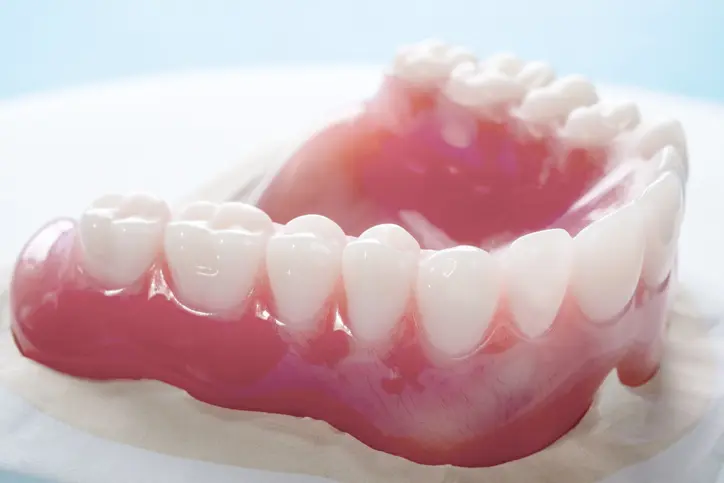
Traditional dentures are also known as conventional dentures. These dentures have been the go-to solution for missing tooth replacement for generations and are still widely used today. They are removable replacement teeth that are set in a pink, gums-colored material. And are use to replace partial areas of missing teeth, or an entire arch of missing teeth.
What are advantages of traditional full or partial dentures?
Traditional dentures are designed to be supported by the soft tissue (your natural gums) in your mouth. As compared to your natural teeth, they have a somewhat bulky feel. They also have a tendency to shift during eating. Even with this, traditional dentures offer several advantages:
- Immediate tooth replacement: After tooth extraction, traditional dentures can restore your ability to eat and speak relatively quickly
- Affordability: Traditional dentures are the most cost-effective option to replace areas of multiple missing teeth
- Non-surgical approach: Apart from any tooth extractions or bone grafting if needed, no surgery is required with traditional dentures, making them suitable for individuals who can’t undergo implant procedures
- Easy maintenance: Because they are removable, daily cleaning of traditional full or partial dentures can be done with ease, whether you’re at home or on the go.
What are disadvantages of traditional full or partial dentures?
In considering full or partial traditional dentures, it’s important to weigh the aspects of their use that may pose significant challenges that affect your daily life. These disadvantages can include:
- Gradual bone loss: Without your natural tooth roots to stimulate your jawbone, the bone gradually shrinks, or deteriorates, over time
- Facial support loss: When you have missing teeth, the naturally occurring process of bone loss (called resorption) can contribute to the appearance of a more aged facial profile
- Loose fit over time: As your jawbone changes shape, so can the fit of traditional dentures, which may feel loose, leading to adjustments and the increased use of adhesives to keep them in place
- Eating limitations: Many foods are difficult or impossible to eat comfortably with traditional dentures, as food often gets caught underneath them, or your biting into foods is impaired
- Social concerns: Worry about traditional dentures slipping during conversation or meals can lead to you feeling like you’re holding back or missing out.
What’s the bottom line with traditional full or partial dentures?
It’s been my experience that most people–if they had a magic wand to wave–would wish for implant supported replacement teeth. The reality is, many of us have financial or situational constraints that may not allow for this. As a consequence, the affordability of traditional dentures is a primary reason for their continued wide use.
The bottom line is this: having replacement teeth so that you can eat, laugh and smile is a good thing. Regardless of how it is that they stay in place.
All-on-4 (or All-on-X) implants (screw-in): the permanent solution for missing teeth
In the early 1990’s, Dr. Paulo Malo of Portugal developed the All-on-4 dental implant protocol for full-arch tooth loss, in cooperation with Nobel Biocare, a global dental implant company. His ground-breaking work led to the first patient being successfully treated in 1998.
What is the All-on-4 procedure, and am I a candidate for All-on-4 dental implants?
The All-on-4 procedure involves the surgical placement of four, full-size dental implants, that are strategically positioned in your jaw bone to support a full arch of replacement teeth. Standard full-size dental implants are typically 3.0 mm (millimeter) or greater in diameter.
The optimal size of dental implant is selected by your dental implant surgeon, based on your bone structure. The full arch of replacement teeth are screwed into the dental implants that are in your jawbone. Often referred to as ‘permanent teeth’, you can’t independently remove the replacement teeth.

What is the difference between All-on-X and All-on-4 screw-in dental implants?
Today, it’s not uncommon to see more than four dental implants used to anchor a full arch of replacement teeth. Your bone levels are a factor in making this determination. The ‘X’ in All-on-X simply refers to the number of dental implants used to support your new permanent teeth.
For example, with All-on-4, four dental implants are utilized, and with All-on-6, six dental implants are surgically placed. Your dental implant surgeon will determine the optimal number of implants based on factors that include:
- quality or density or your jawbone (e.g. bone is solid like oak vs. porous like styrofoam)
- availability or areas of bone
- specific anatomical factors that are discovered through the requisite 3D CBCT (Cone Beam Computed Tomography) imaging
What are pros of All-on-4 or All-on-X permanent replacement teeth (screw-in)?
Advantages of All-on-4 permanent teeth, or All-on-X screw-in options include:
- Permanent solution: A full arch of replacement teeth is screwed into the dental implants. There’s no material on the palate, or roof of your mouth, and you can’t independently remove the teeth
- Bone preservation: The dental implants fuse with and stimulate your jawbone, through a process called osseointegration, preventing the deterioration or shrinkage that occurs with missing teeth
- Full chewing function: You can eat and bite into virtually any food without hesitation
- Natural appearance and feel: The final arch of teeth looks and feels like your natural teeth–most say better
What are cons of All-on-4 or All-on-X permanent replacement teeth (screw-in)?
The All-on-4 or All-on-X screw-in dental implants treatment for replacing a full arch of missing teeth offers superior stability and function. Although there are few disadvantages, those cited include:
- Lack of affordability: The cost of All-on-4 or All-on-X permanent replacement teeth is a barrier for many. While every case is different, these full-size diameter, screw-in implant options are typically upwards of $25,000 per arch. This cost includes:
- the surgical implant placement
- interim prosthetic (arch of replacement teeth) worn for the 4+ months of healing
- final zirconia prosthetic
- Lack of affordability: The cost of All-on-4 or All-on-X permanent replacement teeth is a barrier for many. While every case is different, these full-size diameter, screw-in implant options are typically upwards of $25,000 per arch. This cost includes:
- Surgical procedure: Requires surgical placement of dental implants, and in some cases bone grafting or other surgical elements
- Inability to remove for cleaning: You can’t independently remove the screw-in replacement teeth to clean around your implants. Periodic annual visits to the dental office for professional removal and cleanings are required
What’s the bottom line with screw-in All-on-4 or All-on-X dental implants?
The screw-in dental implant options for a full arch of missing teeth offer a superior and permanent replacement solution. Via the All-on-4 or All-on-X, these dental implant procedures fully restore your ability to eat, chew, and smile. What makes these options inaccessible for many is the high cost of entry.
Are there more affordable implant secure options for multiple missing teeth?
Today’s implant secure solutions for a full arch of missing teeth are multiple. In addition to the screw-in dental implant options which have a high cost of entry, more cost-friendly dental implant options include:
- full-size diameter dental implants, with a snap-in mechanism for stability
- small-diameter dental implants (also called mini-implants)
We’ll explore these options more fully in our next series.